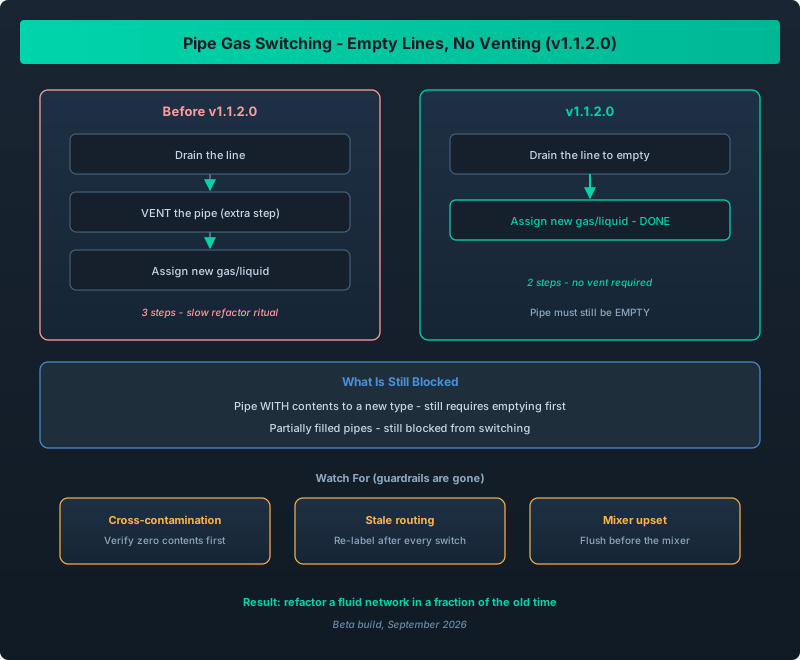
Empty pipes can now take a new gas or liquid directly -- no venting step required
The Venting Step Is Gone
If you have ever re-tooled a fluid network, you know the ritual. You drain a line, confirm it is empty, and then – because the old build would not let you pour a new content type into it – you had to vent the pipe first. It was a small step that cost real time on every refactor, and it made reusing existing runs feel punitive.
v1.1.2.0 removes it. An empty pipe no longer needs to be vented before it can be filled with another gas or liquid type. You clear the line, assign the new content, and move on.
In v1.1.2.0 you can repurpose any empty pipe directly, regardless of what it carried before. No vent step, no purge loop. This makes fluid refactors dramatically faster, but it also means you must be more disciplined about making sure a line is actually empty – the game no longer stops you from switching content on a line, so a sloppy switch can cross-contaminate a mixer downstream.
What Changed, Exactly
The old behaviour treated a pipe’s content type as sticky. Even with zero contents, the pipe remembered what it had carried and would not accept a different fluid until you vented it. The new behaviour drops that constraint for empty lines.
| Situation | Old rule | v1.1.2.0 rule |
|---|---|---|
| Pipe is empty, assign new gas/liquid | Blocked until vented | Allowed directly |
| Pipe has contents, assign new type | Blocked | Still blocked (must empty first) |
| Pipe partially filled | Blocked | Still blocked |
The key word is empty. Nothing about the change lets you mix contents in a loaded line – it only removes the artificial venting gate on lines that are already clear. That distinction is what keeps the change safe as long as you respect it.
Why This Matters More Than It Sounds
Fluid refactors are common in the mid-to-late game for a simple reason: your earlier pipe runs were sized and routed for a chemistry you have since outgrown. When a new recipe or a new tier of production arrives, the fastest path is often to reuse the existing pipe skeleton rather than lay fresh conduit.
Removing the vent step turns that from a chore into a routine. A loop that previously needed draining and venting now just needs draining, and on a station with dozens of fluid runs, that difference compounds fast.
It also makes temporary repurposing viable. Need to route a reactant through a line that normally carries something else, just for one build push? Drain it, switch it, use it, switch it back. The friction that used to make that unreasonable is gone.
How To Repurpose A Line Safely
The new permission is a convenience, not a safety net. Follow the same discipline you would with any fluid refactor:
- Confirm the line is truly empty before you switch its content. Zero contents is the precondition the rule relies on.
- Isolate the run first. Disable or disconnect the feed so nothing trickles back in mid-switch.
- Assign the new gas or liquid at the source end and let it propagate.
- Flush the downstream before reconnecting to a mixer or reactor that cares about purity.
- Re-label your routing so future-you knows what that line now carries.
The reason step five matters: with venting removed, there is nothing stopping a distracted player from switching a line twice and losing track of its current content. Labels and consistent colour conventions are the cheap insurance. The pipe network design guide covers naming and layout conventions that make this painless.
Watch For These Failure Modes
The change is a net win, but three mistakes get easier to make now that the guardrail is gone:
| Risk | Why it happens | Prevention |
|---|---|---|
| Cross-contamination | Switching a line you believed was empty | Verify zero contents, not just “looks empty” |
| Stale routing | Line is now a different fluid than your plan says | Re-label after every switch |
| Mixer upset | Downstream mixer receives a slug of old content | Flush buffer between source and mixer |
None of these are new problems – they just have fewer automatic guards now. If your fluid network is large, the pipeline bottleneck guide is a good companion read for understanding where a bad switch will hurt worst.
Repurposing In Practice: A Worked Example
Say your mid-game base runs a hydrogen line from an electrolyser block to a fuel processor, and you have since moved fuel production elsewhere. That line is now dead weight.
Before v1.1.2.0 you would drain it, vent it, and only then repurpose it. Now:
- Disconnect the electrolyser feed and drain the run to zero.
- Confirm contents read empty at both ends.
- Assign the new content at the source – say, a nitrox feed for a new processing block.
- Flush the old downstream segment before it meets anything that cares about purity.
- Re-label the run.
You just turned a stranded pipe into an active feed in the time it used to take to vent it alone. Do that across a late-game base and the refactor time drops noticeably.
Fitting It Into Your Layout Strategy
The best use of this change is planning. If you know a line may be repurposed later, you can now design for it: keep runs generously routed, cluster fluid handling, and treat your pipe skeleton as a reusable asset rather than a one-off.
That is the same mindset behind good flow-control discipline: decide where content may go before you need it, and the network stays maintainable as the station evolves. The pipe direction and flow control guide walks through the mechanics.
For the wider context on how fluids sit inside your overall logistics, see the gas systems overview.
Empty pipes can now take a new gas or liquid with no venting step. It is a small line in the patch notes with an outsized effect on how fast you can refactor a fluid network – and it makes reusing existing runs genuinely practical. Just keep confirming that a line is actually empty before you switch it, because the game no longer does that checking for you.